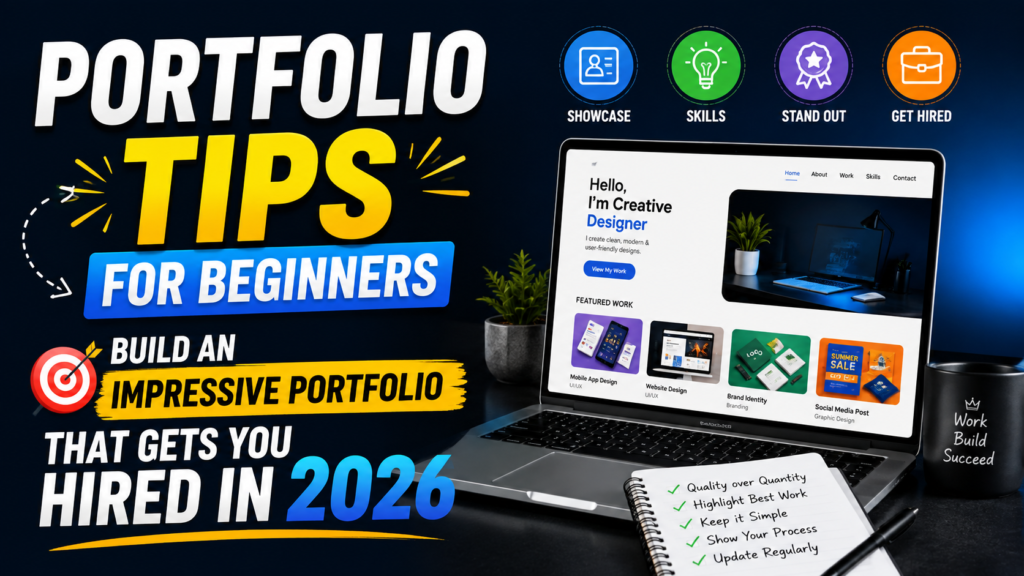
Portfolio Tips for Beginners: Build an Impressive Portfolio That Gets You Hired in 2026
A strong portfolio is one of the most valuable tools for students, freelancers, job seekers, designers, developers, digital marketers, photographers, writers, and other creative professionals. While a resume tells employers about your skills and experience, a portfolio demonstrates your abilities through real examples of your work. In 2026, employers and clients increasingly prefer candidates who can showcase practical skills instead of simply listing qualifications. Whether you’re starting your career or looking to attract freelance clients, building a professional portfolio can significantly improve your chances of success. This guide explains the best portfolio tips for beginners and how to create a portfolio that stands out in today’s competitive job market. What Is a Portfolio? A portfolio is a collection of your best work that highlights your skills, experience, achievements, and projects. It provides proof of your abilities and helps employers or clients understand the quality of your work. A portfolio can include: Your portfolio should reflect your expertise and demonstrate how you solve real-world problems. Why Is a Portfolio Important? A professional portfolio builds trust and credibility. Instead of telling potential employers what you can do, it shows them. Benefits of having a portfolio include: Many recruiters review portfolios before scheduling interviews, making it an essential career asset. 1. Define Your Career Goal Before creating your portfolio, decide what type of work you want to showcase. For example: Your portfolio should align with the type of jobs or clients you want to attract. 2. Showcase Your Best Work Quality is more important than quantity. Instead of uploading every project you’ve completed, select a few high-quality examples that demonstrate your strongest skills. Each project should clearly explain: Employers appreciate portfolios that focus on meaningful outcomes rather than large numbers of projects. 3. Create Detailed Case Studies One of the best ways to strengthen your portfolio is by including case studies. A good case study explains: Case studies help employers understand how you think and solve problems. 4. Keep Your Design Simple and Professional Your portfolio should be easy to navigate. Use: Avoid cluttered pages or excessive animations that distract visitors from your work. 5. Write a Strong About Section Introduce yourself with a short professional summary. Include: Keep the tone friendly, confident, and authentic. Let visitors know what makes you unique. 6. Highlight Your Skills Create a dedicated section for your technical and professional skills. Examples include: Be honest about your skill level and update this section as you learn new technologies. 7. Include Testimonials Testimonials from clients, mentors, professors, or colleagues add credibility to your portfolio. Positive feedback demonstrates reliability, professionalism, and the ability to deliver quality work. Even short testimonials can significantly increase trust. 8. Optimize Your Portfolio for SEO If your portfolio is hosted on a website, basic SEO can help recruiters and clients discover it through search engines. SEO best practices include: SEO can increase your portfolio’s visibility and attract more opportunities. 9. Keep Your Portfolio Updated A portfolio should grow with your career. Regularly: An up-to-date portfolio reflects continuous learning and professional growth. 10. Add Contact Information Make it easy for recruiters or clients to reach you. Include: A clear contact section encourages potential employers to connect with you. Common Portfolio Mistakes to Avoid Many beginners reduce the effectiveness of their portfolios by making avoidable mistakes. Some common errors include: Avoiding these mistakes helps create a more professional impression. Best Tools for Building a Portfolio You don’t need advanced coding skills to create a great portfolio. Popular tools include: Choose a platform that matches your skills and career goals. Conclusion A well-designed portfolio is one of the most effective ways to showcase your skills, build credibility, and attract job opportunities in 2026. Whether you’re a student, freelancer, or experienced professional, your portfolio serves as proof of your expertise and demonstrates the value you can bring to employers or clients. Focus on quality over quantity, present your work through detailed case studies, maintain a clean and professional design, optimize your portfolio for SEO, and update it regularly with your latest achievements. By investing time in building a strong portfolio, you’ll increase your chances of standing out in a competitive market and opening the door to exciting career opportunities.