Meta Ads vs Google Ads: Which Is Better in 2026? Complete Comparison Guide
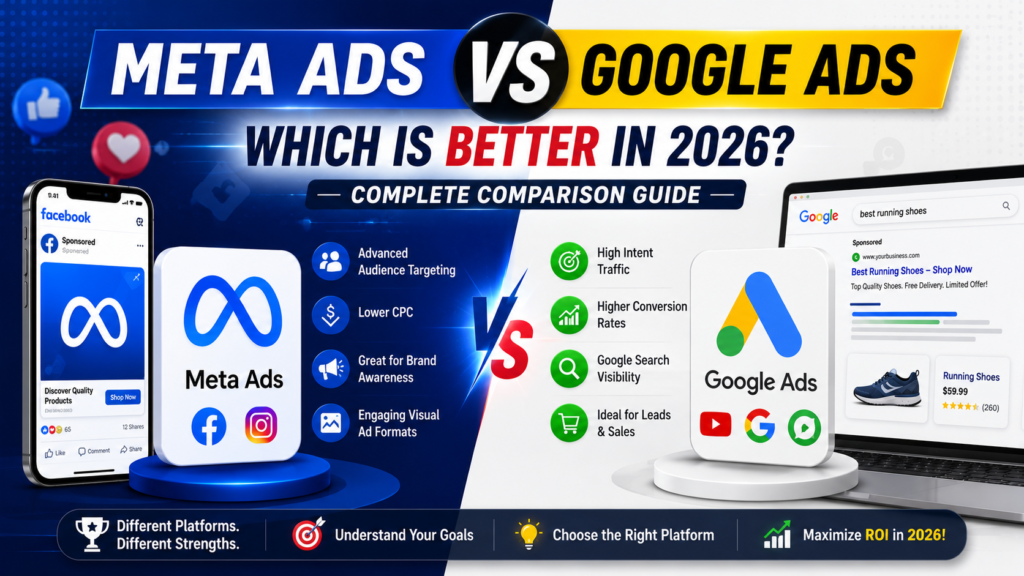
Online advertising has become one of the most effective ways for businesses to generate leads, increase sales, and build brand awareness. In 2026, two platforms continue to dominate the digital advertising landscape—Meta Ads and Google Ads. While both platforms help businesses reach potential customers, they work in different ways and serve different marketing objectives. If you’re wondering whether Meta Ads or Google Ads is the better choice for your business, this guide will explain their differences, advantages, disadvantages, and help you choose the right platform for your marketing goals. What Are Meta Ads? Meta Ads is the advertising platform developed by Meta that allows businesses to advertise across Facebook, Instagram, Messenger, and the Meta Audience Network. Unlike search advertising, Meta Ads focus on reaching people based on their interests, demographics, online behavior, and interactions. Even if users are not actively searching for your product or service, Meta’s algorithm displays relevant ads that match their interests. Businesses can create various ad formats, including: Meta Ads are especially effective for building brand awareness, increasing engagement, and driving traffic to websites or online stores. What Are Google Ads? Google Ads is Google’s online advertising platform that allows businesses to display advertisements across Google Search, YouTube, Google Maps, Gmail, Google Shopping, Discover, and millions of websites within the Google Display Network. Unlike Meta Ads, Google Ads target users based on search intent. This means your advertisements appear when someone actively searches for keywords related to your products or services. For example, if someone searches for “best digital marketing agency near me”, Google Ads can place your business at the top of the search results. This makes Google Ads highly effective for generating qualified leads and sales. Meta Ads vs Google Ads: Key Differences 1. Audience Intent The biggest difference between Meta Ads and Google Ads is user intent. Google Ads reach people who are already searching for a solution. These users often have a strong buying intent, making them more likely to convert into customers. Meta Ads, on the other hand, create demand by showing advertisements to users based on their interests and behavior, even before they begin searching. If your goal is immediate leads and sales, Google Ads generally performs better. If your goal is increasing brand awareness or introducing a new product, Meta Ads are often the better choice. 2. Targeting Capabilities Meta Ads provide advanced audience targeting using: Google Ads primarily target users through: Meta excels at audience discovery, while Google excels at capturing demand. 3. Advertising Cost The cost of advertising depends on your industry, competition, audience, and campaign quality. Meta Ads often have a lower Cost Per Click (CPC), making them attractive for startups and small businesses with limited budgets. Google Ads usually have higher CPCs because advertisers compete for valuable search keywords. However, those clicks often produce higher conversion rates since users already intend to purchase or inquire. Instead of focusing only on CPC, businesses should evaluate Cost Per Acquisition (CPA) and Return on Investment (ROI). 4. Brand Awareness Meta Ads are excellent for increasing brand awareness. Visual content such as videos, Reels, Stories, and carousel ads captures users’ attention while they browse social media. Businesses launching new products or building a new brand often start with Meta Ads to create awareness before running search campaigns. 5. Lead Generation Google Ads typically produce stronger lead quality. Someone searching for: already has a clear intention to purchase or request information. This often leads to higher conversion rates compared to interruptive advertising. 6. Creative Flexibility Meta Ads provide greater creative opportunities. Businesses can use: Google Search Ads mainly rely on compelling headlines, descriptions, extensions, and relevant keywords. Although Google also supports video and display advertising, Meta remains stronger for visual storytelling. 7. AI-Powered Optimization In 2026, both advertising platforms rely heavily on Artificial Intelligence. Meta AI automatically optimizes: Google AI improves: Businesses that combine AI automation with human strategy generally achieve the best advertising results. Which Businesses Should Choose Meta Ads? Meta Ads work particularly well for: These businesses benefit from visually engaging advertisements and audience discovery. Which Businesses Should Choose Google Ads? Google Ads perform exceptionally well for businesses offering services or products that customers actively search for. Examples include: Because these businesses rely on customer intent, Google Ads often deliver stronger conversion rates. Can You Use Both Platforms Together? Absolutely. Many successful businesses combine Meta Ads and Google Ads to create a complete marketing funnel. For example: Using both platforms together creates a seamless customer journey—from awareness to consideration and finally conversion. Which Platform Offers Better ROI? There is no universal winner. If your objective is: then Meta Ads usually deliver excellent value. If your goal is: Google Ads often provide a stronger return on investment. The best platform depends on your business type, target audience, budget, and marketing objectives. Conclusion Meta Ads and Google Ads are both powerful digital advertising platforms, but they serve different purposes. Meta Ads excel at creating demand, building brand awareness, and engaging audiences with visually appealing content. Google Ads are designed to capture existing demand by connecting businesses with users actively searching for products or services. Rather than choosing one platform over the other, many businesses achieve the best results by combining both. Meta Ads build awareness and interest, while Google Ads convert that interest into qualified leads and sales. A balanced strategy that leverages the strengths of both platforms can help businesses maximize their reach, improve ROI, and achieve sustainable growth in 2026.