Author name: digitalsameershah@gmail.com

Digital Sameer Shah is a Digital Marketing Freelancer specializing in SEO, Google Ads, Meta Ads, Social Media Marketing, Content Marketing, and Website Development. I help businesses in Mumbai, across India, and internationally build a strong online presence, generate quality leads, and grow their business through effective digital marketing strategies. I am also open to full-time, part-time, remote, and freelance opportunities.

Blog

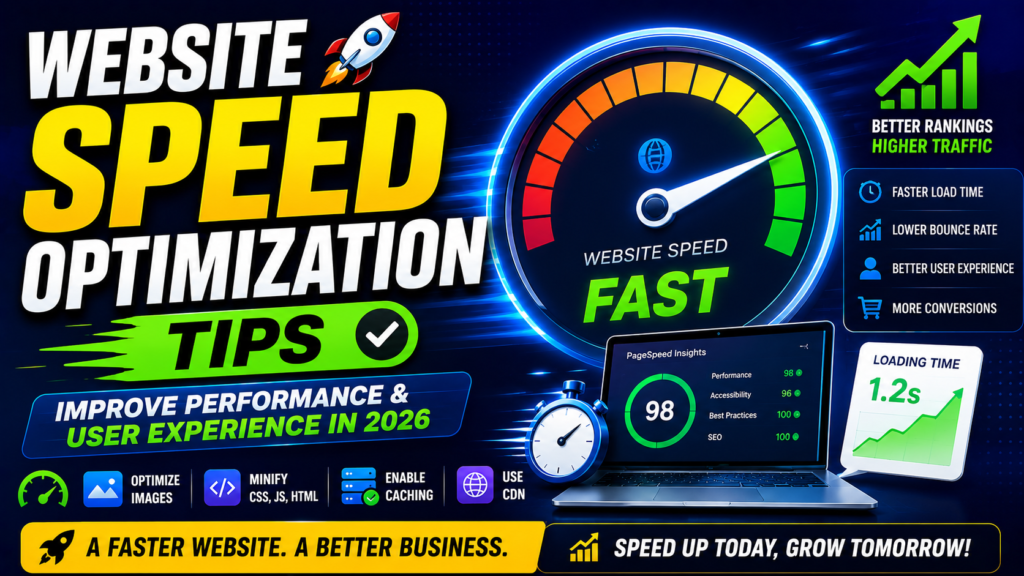
Website Speed Optimization Tips: Improve Performance and User Experience in 2026

In today’s fast-paced digital world, users expect websites to load almost instantly. A slow website can frustrate visitors, increase bounce rates, reduce conversions, and negatively impact search engine rankings. Whether you run a business website, an e-commerce store, or a personal blog, website speed optimization is essential for providing a better user experience and improving online visibility. In 2026, website speed is not just a technical concern—it is a critical factor for SEO, customer satisfaction, and business growth. This guide explains why website speed matters and shares practical tips to help you optimize your website for maximum performance. Why Website Speed Matters Website speed directly affects how users interact with your website. Studies show that visitors are more likely to leave a page if it takes more than a few seconds to load. Faster websites encourage users to stay longer, explore more pages, and complete actions such as making a purchase or filling out a contact form. Search engines like Google also consider page speed as an important ranking factor. A fast-loading website improves your chances of appearing higher in search results, leading to increased organic traffic and better visibility. Additionally, website speed contributes to improved mobile performance, higher conversion rates, and greater customer satisfaction. 1. Choose a Reliable Web Hosting Provider Your hosting provider plays a significant role in your website’s performance. Shared hosting may be affordable, but it can slow down your site if server resources are limited. For better performance, consider: A reliable hosting provider ensures faster server response times, better uptime, and improved scalability as your business grows. 2. Optimize Images Large image files are one of the most common reasons for slow-loading websites. To improve speed: Optimized images reduce page size and improve loading times across all devices. 3. Minify CSS, JavaScript, and HTML Website files often contain unnecessary spaces, comments, and unused code that increase file size. Minifying CSS, JavaScript, and HTML removes unnecessary elements while keeping functionality intact. Benefits include: Many optimization plugins and build tools can automate this process. 4. Enable Browser Caching Browser caching stores static website resources such as images, stylesheets, and scripts on visitors’ devices. When users return to your website, their browser loads cached files instead of downloading everything again. This significantly improves page load times for returning visitors while reducing server load. 5. Use a Content Delivery Network (CDN) A CDN stores copies of your website across multiple servers located around the world. When someone visits your website, content is delivered from the server closest to their location, reducing latency and improving loading speed. A CDN is especially useful for businesses with visitors from different countries. 6. Reduce HTTP Requests Every image, script, stylesheet, and font on your website creates an HTTP request. Too many requests increase loading times. To reduce HTTP requests: Simplifying your website reduces server requests and improves performance. 7. Optimize for Mobile Devices Most internet users browse websites using smartphones. A mobile-friendly website should: Mobile optimization not only improves user experience but also supports better search engine rankings. 8. Improve Core Web Vitals Core Web Vitals measure how users experience your website. The three primary metrics include: Improving these metrics helps enhance user experience and supports better SEO performance. 9. Remove Unnecessary Plugins Using too many plugins can slow down your website by increasing server requests and loading additional scripts. Regularly review installed plugins and remove those that are: Keeping only essential plugins improves website performance and security. 10. Enable GZIP or Brotli Compression Compression reduces the size of website files before they are sent to users’ browsers. Popular compression methods include: Smaller files download faster, resulting in improved page speed and reduced bandwidth usage. 11. Optimize Your Database Over time, your website database collects unnecessary data such as spam comments, post revisions, temporary files, and expired records. Regular database optimization helps: Website owners should schedule routine database maintenance to keep their sites running smoothly. 12. Monitor Website Performance Regularly Website optimization is an ongoing process rather than a one-time task. Regularly monitor important metrics such as: Performance monitoring tools can identify issues before they affect user experience or search rankings. Common Website Speed Mistakes Many website owners unknowingly reduce performance by making avoidable mistakes, including: Avoiding these issues can significantly improve website speed and user satisfaction. Benefits of Website Speed Optimization Investing in website speed optimization provides several long-term benefits, including: Fast websites create a positive first impression and encourage visitors to engage with your business. Conclusion Website speed optimization is one of the most valuable investments businesses can make in 2026. A fast-loading website not only improves user experience but also supports higher search engine rankings, stronger customer engagement, and increased conversions. By choosing reliable hosting, optimizing images, minimizing code, enabling caching, using a CDN, improving Core Web Vitals, and continuously monitoring performance, businesses can build websites that are both fast and reliable. As online competition continues to grow, website speed is no longer optional. Businesses that prioritize performance will deliver better experiences, attract more visitors, and achieve sustainable digital growth.
Blog

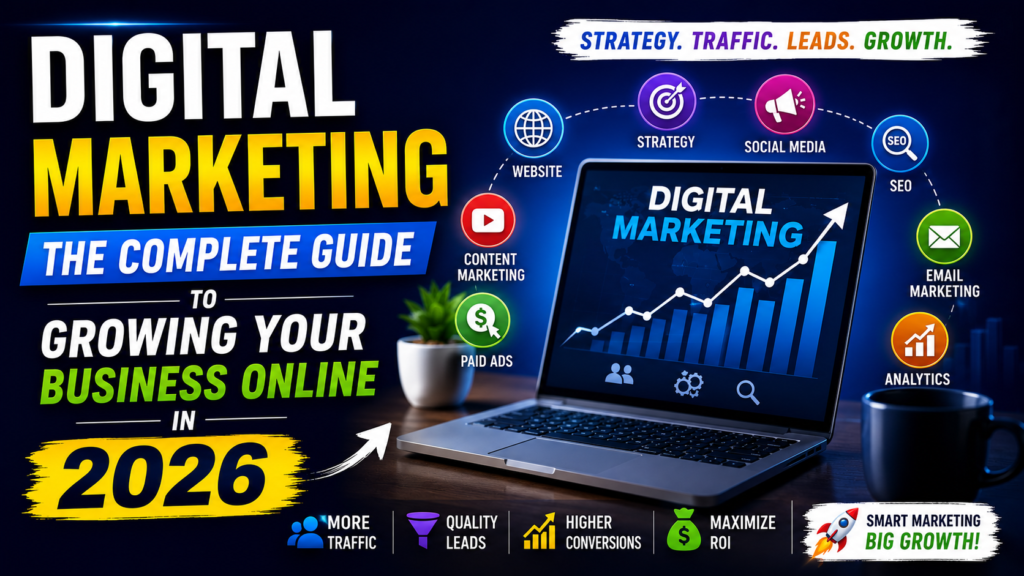
Digital Marketing: The Complete Guide to Growing Your Business Online in 2026

In today’s digital world, having a great product or service is no longer enough. Businesses must also establish a strong online presence to reach their target audience, generate leads, and increase sales. This is where Digital Marketing plays a vital role. Digital marketing is the process of promoting products, services, or brands using online channels such as search engines, social media, websites, email, and paid advertising. Unlike traditional marketing, digital marketing allows businesses to connect with the right audience, measure campaign performance, and achieve better results with a cost-effective budget. Whether you’re a startup, small business owner, freelancer, or large enterprise, digital marketing is one of the most powerful tools for business growth in 2026. What is Digital Marketing? Digital marketing refers to all marketing activities that use the internet or digital devices to promote a business. It helps companies reach potential customers where they spend most of their time—online. The primary goal of digital marketing is to attract visitors, convert them into customers, and build long-term relationships through valuable content and personalized experiences. With billions of people using Google, Facebook, Instagram, YouTube, LinkedIn, and other online platforms every day, digital marketing has become essential for businesses of every size. Why Digital Marketing is Important Digital marketing offers several advantages over traditional advertising methods. It allows businesses to target specific audiences based on location, interests, age, behavior, and search intent. This ensures that marketing budgets are spent more efficiently. Another major benefit is measurable performance. Businesses can track website traffic, conversions, customer engagement, and return on investment (ROI) using analytics tools. Digital marketing also helps build brand awareness, improve customer trust, increase online visibility, and generate qualified leads consistently. Key Components of Digital Marketing 1. Search Engine Optimization (SEO) SEO is the process of improving a website so it ranks higher on search engines like Google. When your website appears on the first page of search results, it receives more organic traffic without paying for advertisements. SEO includes: A well-optimized website attracts visitors who are actively searching for your products or services. 2. Content Marketing Content is the foundation of digital marketing. Businesses create valuable content to educate, inform, and engage their audience instead of directly selling to them. Examples include: High-quality content improves SEO, builds authority, and increases customer trust. 3. Social Media Marketing Social media platforms have become essential marketing channels. Businesses use Facebook, Instagram, LinkedIn, YouTube, Pinterest, Threads, and X (formerly Twitter) to connect with customers and promote their brands. Popular social media strategies include: Consistent posting and audience engagement help businesses build loyal communities. 4. Pay-Per-Click (PPC) Advertising PPC advertising allows businesses to display ads on Google, YouTube, Facebook, Instagram, and other platforms. Advertisers only pay when someone clicks on their advertisement. Popular PPC platforms include: PPC campaigns provide immediate visibility and generate high-quality leads when properly optimized. 5. Email Marketing Email marketing remains one of the highest-return digital marketing strategies. Businesses use email campaigns to: Personalized emails often generate higher engagement and conversions than generic promotional messages. 6. Affiliate Marketing Affiliate marketing allows businesses to partner with influencers, bloggers, and publishers who promote products in exchange for a commission. This strategy helps brands reach new audiences while paying only for successful sales or leads. 7. Influencer Marketing Influencers have become trusted voices in many industries. Businesses collaborate with influencers to promote products through authentic reviews, demonstrations, and recommendations. In 2026, micro-influencers with smaller but highly engaged audiences often deliver better results than celebrity influencers. Latest Digital Marketing Trends in 2026 The digital marketing industry continues to evolve rapidly. Some of the biggest trends include: Businesses that adopt these trends stay ahead of competitors and improve customer engagement. Benefits of Digital Marketing Digital marketing offers numerous advantages, including: These benefits make digital marketing an essential investment for businesses of all sizes. Common Digital Marketing Mistakes Many businesses fail to achieve results because they make avoidable mistakes. Some common mistakes include: Avoiding these mistakes can significantly improve marketing performance. How to Build an Effective Digital Marketing Strategy A successful digital marketing strategy starts with clear business goals. Begin by understanding your target audience and identifying the platforms they use most. Next, create valuable content that solves customer problems and answers common questions. Optimize your website for search engines, invest in social media marketing, run targeted advertising campaigns, and track your performance using analytics tools. Regularly analyze your results and make improvements based on customer behavior and campaign data. Consistency, creativity, and continuous optimization are the keys to long-term success. The Future of Digital Marketing Digital marketing will continue to become more data-driven and customer-focused. Artificial Intelligence, automation, predictive analytics, voice search, and personalized experiences will shape the future of online marketing. Businesses that embrace new technologies while maintaining authentic customer relationships will have a significant competitive advantage. The future belongs to brands that provide value, build trust, and create meaningful connections with their audience. Conclusion Digital marketing is no longer optional—it is a necessity for businesses that want to grow in today’s competitive online environment. From SEO and content marketing to social media, paid advertising, email marketing, and AI-powered automation, every digital marketing channel plays an important role in attracting customers and increasing revenue. Success in digital marketing doesn’t happen overnight. It requires a clear strategy, consistent effort, quality content, and continuous learning. By understanding the latest trends and implementing the right marketing techniques, businesses can strengthen their online presence, generate more leads, increase customer loyalty, and achieve sustainable growth in 2026 and beyond.

Blog

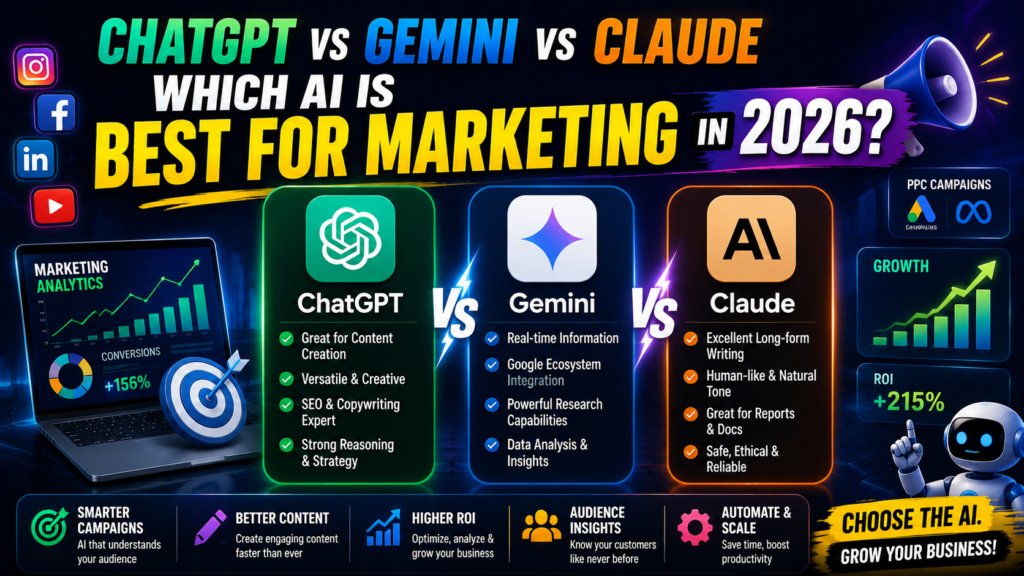
ChatGPT vs Gemini vs Claude: Which AI is Best for Marketing in 2026?

Artificial Intelligence (AI) has transformed the way businesses approach digital marketing. From writing blog posts and creating ad copy to analyzing customer data and automating workflows, AI tools have become essential for marketers in 2026. Among the leading AI assistants, ChatGPT, Google Gemini, and Claude stand out as the most popular choices. Each platform offers unique strengths, making the “best” AI tool depend on your specific marketing needs. Whether you’re a digital marketer, business owner, content creator, or agency, understanding the differences between these AI models can help you improve productivity and achieve better results. Why AI Matters in Digital Marketing Modern marketing requires businesses to create high-quality content, manage multiple channels, optimize advertising campaigns, and respond quickly to customer needs. AI simplifies these tasks by automating repetitive work while providing valuable insights. AI marketing tools help businesses: Instead of replacing marketers, AI acts as a powerful assistant that supports creativity, research, and decision-making. What is ChatGPT? ChatGPT, developed by OpenAI, is one of the most widely used AI assistants for marketing. It excels at generating high-quality written content, brainstorming ideas, coding, creating marketing strategies, and assisting with customer communication. Marketers commonly use ChatGPT for: Its conversational style and ability to generate detailed responses make it an excellent all-around marketing assistant. What is Google Gemini? Google Gemini is Google’s AI platform designed to integrate closely with Google’s ecosystem. It performs particularly well in research, data analysis, and productivity tasks across Google Workspace. Gemini is useful for: Because of its connection with Google’s services, Gemini is especially valuable for businesses that already rely on Google Workspace. What is Claude? Claude, developed by Anthropic, is known for producing thoughtful, structured, and natural-sounding content. It performs exceptionally well when handling long documents, reports, and detailed business writing. Marketing professionals use Claude for: Claude focuses on clarity, consistency, and high-quality writing, making it ideal for professional business communication. Content Creation Comparison Content marketing remains one of the most important aspects of digital marketing. ChatGPT is highly versatile and generates engaging blog posts, website content, and marketing copy quickly. Gemini is excellent for gathering research and supporting content planning with up-to-date information. Claude stands out for creating polished, well-structured, and natural long-form articles. For marketers who publish blogs regularly, ChatGPT and Claude are particularly strong choices. SEO and Keyword Research SEO is essential for driving organic traffic. ChatGPT helps generate optimized titles, meta descriptions, FAQs, and content outlines. Gemini performs well when researching search trends and organizing information, making it useful for planning SEO strategies. Claude helps improve readability, structure, and clarity but is generally used after keyword research has been completed. Combining AI with professional SEO tools produces the best results. Advertising and Marketing Campaigns When creating Google Ads or Meta Ads campaigns: ChatGPT quickly generates multiple headline and ad copy variations for testing. Gemini helps marketers research audiences, competitors, and campaign ideas. Claude writes persuasive landing page content and detailed campaign messaging that aligns with brand tone. Successful advertisers often use more than one AI tool throughout the campaign creation process. Ease of Use All three AI platforms are user-friendly. ChatGPT offers a simple conversational interface suitable for beginners and professionals. Gemini integrates naturally into Google products, making it convenient for users already working in Google Workspace. Claude provides a clean writing experience that is particularly comfortable for professionals managing large documents. Choosing between them largely depends on your preferred workflow. AI for Digital Marketing Agencies Digital marketing agencies often require AI for multiple tasks every day. ChatGPT helps agencies create content, marketing strategies, proposals, client reports, and advertising copy. Gemini supports research, productivity, and collaboration through Google’s ecosystem. Claude assists with detailed documentation, editing, and client communication. Many successful agencies combine all three platforms to improve efficiency. Pros and Cons ChatGPT Pros Cons Google Gemini Pros Cons Claude Pros Cons Which AI Should Marketers Choose? There is no single winner because every business has different marketing goals. Choose ChatGPT if you need an all-in-one AI assistant for content creation, SEO, social media, email marketing, coding, and campaign planning. Choose Google Gemini if your business relies heavily on Google Workspace and requires strong research capabilities and productivity tools. Choose Claude if you regularly create long-form business documents, reports, and professionally written content. Many businesses combine all three tools to take advantage of their unique strengths. Conclusion AI has become an essential part of modern digital marketing, helping businesses create content faster, optimize campaigns, and improve productivity. ChatGPT, Google Gemini, and Claude each offer valuable features that can support marketers in different ways. For most marketers, ChatGPT provides the most balanced combination of creativity, marketing knowledge, content generation, and versatility. Gemini excels in research and integration with Google’s ecosystem, while Claude shines in long-form writing and professional communication. Rather than viewing these platforms as competitors, businesses can use them together to build smarter workflows, produce higher-quality content, and deliver better marketing results. The best AI is the one that fits your business goals, team workflow, and marketing strategy in 2026.

Blog

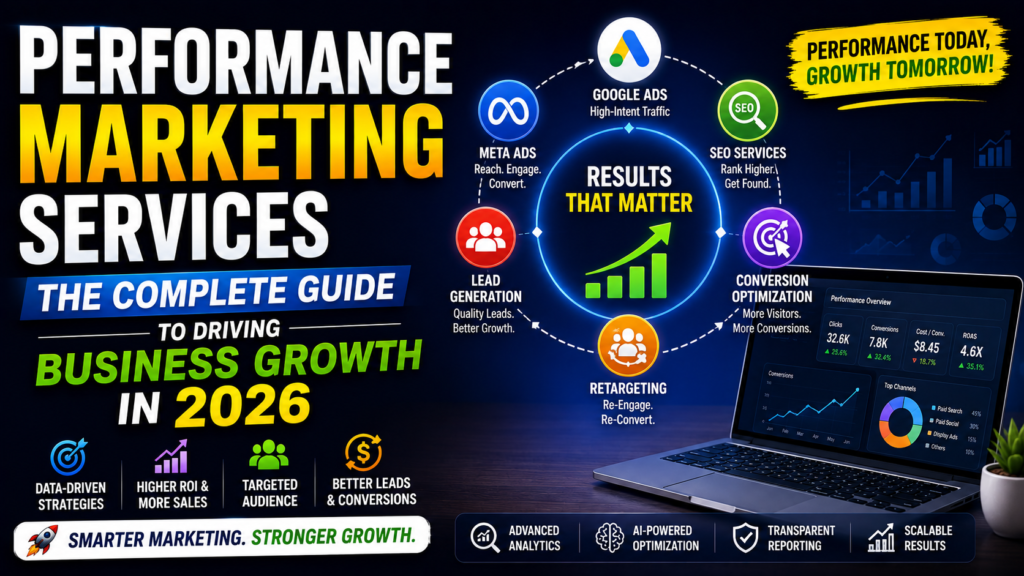
Performance Marketing Services: The Complete Guide to Driving Business Growth in 2026

In today’s competitive digital landscape, businesses want marketing strategies that deliver measurable results instead of relying on guesswork. This is where Performance Marketing Services have become one of the most effective solutions for companies looking to generate leads, increase sales, and maximize their return on investment (ROI). Unlike traditional advertising, where businesses pay upfront regardless of results, performance marketing focuses on outcomes such as clicks, leads, app installs, or sales. Every campaign is tracked, analyzed, and optimized to ensure your marketing budget is spent efficiently. Whether you’re a startup, e-commerce brand, local business, or enterprise, performance marketing services can help you reach the right audience, improve conversions, and grow your business faster in 2026. What Are Performance Marketing Services? Performance marketing services are digital marketing solutions where campaigns are designed and optimized based on measurable performance metrics. Instead of paying simply for exposure, businesses invest in marketing efforts that generate real business outcomes. These services use data, analytics, and AI-powered optimization to improve campaign performance across various online platforms. Common goals include: Performance marketing allows businesses to monitor every click, impression, and conversion, making it easier to calculate ROI and improve future campaigns. Why Performance Marketing is Important Modern consumers interact with brands across multiple online channels before making a purchase. Businesses need a marketing strategy that delivers measurable results throughout the customer journey. Performance marketing helps businesses: With advanced analytics and AI-driven optimization, businesses can make data-backed decisions that lead to sustainable growth. Key Performance Marketing Services 1. Google Ads Management Google Ads is one of the most powerful performance marketing channels because it targets users who are actively searching for products or services. Professional Google Ads services include: A well-managed Google Ads campaign helps businesses attract high-intent customers and increase conversions. 2. Meta Ads Management Meta Ads allow businesses to advertise across Facebook, Instagram, Messenger, and the Audience Network. Performance marketers create campaigns that focus on: Meta Ads are particularly effective for visually engaging products and audience discovery. 3. Search Engine Optimization (SEO) Although SEO is a long-term strategy, it plays an important role in performance marketing by generating consistent organic traffic. SEO services include: Strong SEO reduces dependence on paid advertising while increasing long-term visibility. 4. Landing Page Optimization Driving traffic is only part of the marketing process. Performance marketing also focuses on improving landing pages by optimizing: Well-designed landing pages significantly improve conversion rates. 5. Conversion Rate Optimization (CRO) CRO helps businesses convert more website visitors into customers without increasing advertising budgets. Common CRO techniques include: Even small improvements in conversion rates can dramatically increase revenue. 6. Remarketing Campaigns Most visitors do not convert during their first website visit. Remarketing campaigns allow businesses to reconnect with previous visitors using personalized advertisements across Google and Meta platforms. This increases brand recall and improves conversion opportunities. 7. Analytics and Performance Reporting Performance marketing relies heavily on accurate data. Professional agencies track important metrics such as: Detailed reports help businesses understand campaign performance and make informed decisions. Benefits of Performance Marketing Services Performance marketing offers numerous advantages for businesses of every size. Some of the biggest benefits include: These benefits make performance marketing one of the most efficient digital marketing strategies available today. AI in Performance Marketing Artificial Intelligence is transforming performance marketing in 2026. AI-powered tools help marketers: AI enables businesses to achieve better results while reducing manual work and improving campaign efficiency. Who Needs Performance Marketing Services? Performance marketing is suitable for almost every business, including: Any business that wants measurable growth can benefit from a performance marketing strategy. Choosing the Right Performance Marketing Agency When selecting a performance marketing agency, consider the following factors: A reliable agency focuses on achieving your business goals rather than simply increasing advertising spend. Conclusion Performance marketing services have become essential for businesses that want measurable, scalable, and profitable digital growth in 2026. By combining Google Ads, Meta Ads, SEO, landing page optimization, conversion rate optimization, remarketing, analytics, and AI-powered automation, businesses can attract the right audience and maximize every marketing dollar. Unlike traditional advertising, performance marketing focuses on real business outcomes—not just impressions or clicks. With continuous testing, optimization, and data analysis, companies can improve campaign performance, generate more qualified leads, increase sales, and achieve a stronger return on investment. As digital competition continues to grow, investing in professional performance marketing services is one of the smartest ways to build a sustainable online presence and drive long-term business success.

Blog

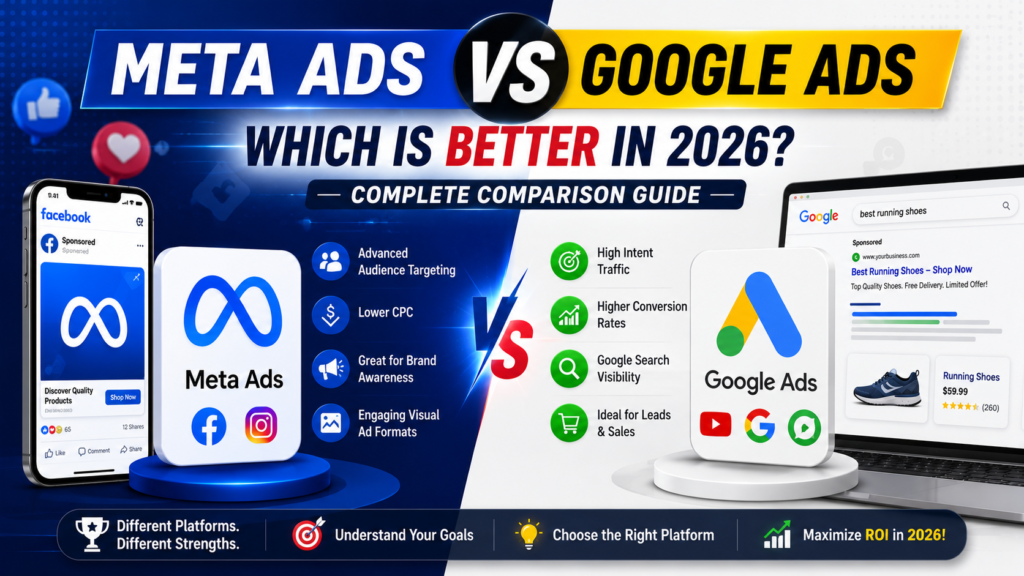
Meta Ads vs Google Ads: Which Is Better in 2026? Complete Comparison Guide

Online advertising has become one of the most effective ways for businesses to generate leads, increase sales, and build brand awareness. In 2026, two platforms continue to dominate the digital advertising landscape—Meta Ads and Google Ads. While both platforms help businesses reach potential customers, they work in different ways and serve different marketing objectives. If you’re wondering whether Meta Ads or Google Ads is the better choice for your business, this guide will explain their differences, advantages, disadvantages, and help you choose the right platform for your marketing goals. What Are Meta Ads? Meta Ads is the advertising platform developed by Meta that allows businesses to advertise across Facebook, Instagram, Messenger, and the Meta Audience Network. Unlike search advertising, Meta Ads focus on reaching people based on their interests, demographics, online behavior, and interactions. Even if users are not actively searching for your product or service, Meta’s algorithm displays relevant ads that match their interests. Businesses can create various ad formats, including: Meta Ads are especially effective for building brand awareness, increasing engagement, and driving traffic to websites or online stores. What Are Google Ads? Google Ads is Google’s online advertising platform that allows businesses to display advertisements across Google Search, YouTube, Google Maps, Gmail, Google Shopping, Discover, and millions of websites within the Google Display Network. Unlike Meta Ads, Google Ads target users based on search intent. This means your advertisements appear when someone actively searches for keywords related to your products or services. For example, if someone searches for “best digital marketing agency near me”, Google Ads can place your business at the top of the search results. This makes Google Ads highly effective for generating qualified leads and sales. Meta Ads vs Google Ads: Key Differences 1. Audience Intent The biggest difference between Meta Ads and Google Ads is user intent. Google Ads reach people who are already searching for a solution. These users often have a strong buying intent, making them more likely to convert into customers. Meta Ads, on the other hand, create demand by showing advertisements to users based on their interests and behavior, even before they begin searching. If your goal is immediate leads and sales, Google Ads generally performs better. If your goal is increasing brand awareness or introducing a new product, Meta Ads are often the better choice. 2. Targeting Capabilities Meta Ads provide advanced audience targeting using: Google Ads primarily target users through: Meta excels at audience discovery, while Google excels at capturing demand. 3. Advertising Cost The cost of advertising depends on your industry, competition, audience, and campaign quality. Meta Ads often have a lower Cost Per Click (CPC), making them attractive for startups and small businesses with limited budgets. Google Ads usually have higher CPCs because advertisers compete for valuable search keywords. However, those clicks often produce higher conversion rates since users already intend to purchase or inquire. Instead of focusing only on CPC, businesses should evaluate Cost Per Acquisition (CPA) and Return on Investment (ROI). 4. Brand Awareness Meta Ads are excellent for increasing brand awareness. Visual content such as videos, Reels, Stories, and carousel ads captures users’ attention while they browse social media. Businesses launching new products or building a new brand often start with Meta Ads to create awareness before running search campaigns. 5. Lead Generation Google Ads typically produce stronger lead quality. Someone searching for: already has a clear intention to purchase or request information. This often leads to higher conversion rates compared to interruptive advertising. 6. Creative Flexibility Meta Ads provide greater creative opportunities. Businesses can use: Google Search Ads mainly rely on compelling headlines, descriptions, extensions, and relevant keywords. Although Google also supports video and display advertising, Meta remains stronger for visual storytelling. 7. AI-Powered Optimization In 2026, both advertising platforms rely heavily on Artificial Intelligence. Meta AI automatically optimizes: Google AI improves: Businesses that combine AI automation with human strategy generally achieve the best advertising results. Which Businesses Should Choose Meta Ads? Meta Ads work particularly well for: These businesses benefit from visually engaging advertisements and audience discovery. Which Businesses Should Choose Google Ads? Google Ads perform exceptionally well for businesses offering services or products that customers actively search for. Examples include: Because these businesses rely on customer intent, Google Ads often deliver stronger conversion rates. Can You Use Both Platforms Together? Absolutely. Many successful businesses combine Meta Ads and Google Ads to create a complete marketing funnel. For example: Using both platforms together creates a seamless customer journey—from awareness to consideration and finally conversion. Which Platform Offers Better ROI? There is no universal winner. If your objective is: then Meta Ads usually deliver excellent value. If your goal is: Google Ads often provide a stronger return on investment. The best platform depends on your business type, target audience, budget, and marketing objectives. Conclusion Meta Ads and Google Ads are both powerful digital advertising platforms, but they serve different purposes. Meta Ads excel at creating demand, building brand awareness, and engaging audiences with visually appealing content. Google Ads are designed to capture existing demand by connecting businesses with users actively searching for products or services. Rather than choosing one platform over the other, many businesses achieve the best results by combining both. Meta Ads build awareness and interest, while Google Ads convert that interest into qualified leads and sales. A balanced strategy that leverages the strengths of both platforms can help businesses maximize their reach, improve ROI, and achieve sustainable growth in 2026.

Blog

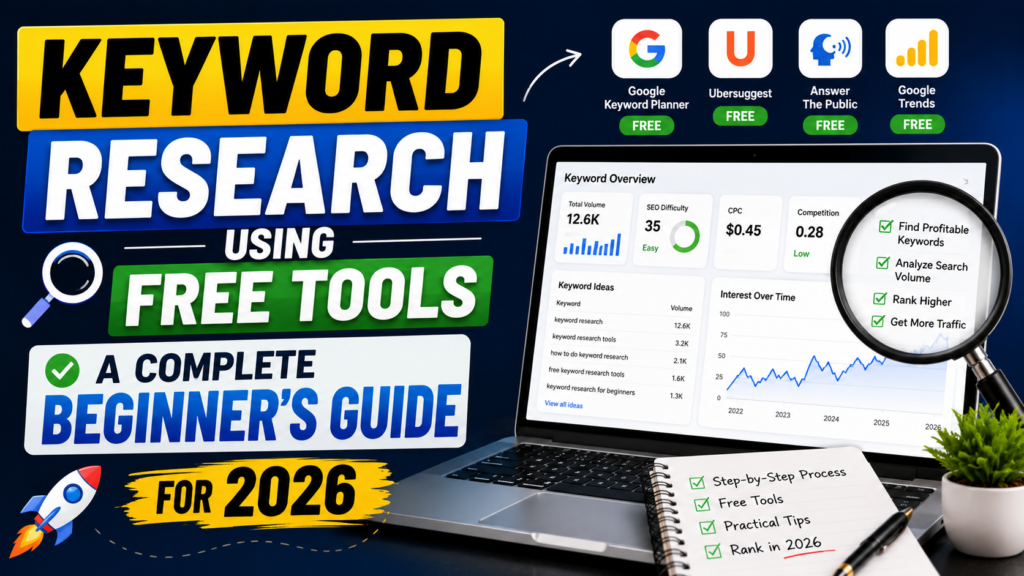
Keyword Research Using Free Tools: A Complete Beginner’s Guide for 2026

Keyword research is the foundation of every successful SEO and digital marketing strategy. Whether you’re writing blog posts, creating YouTube videos, launching an online store, or running a business website, choosing the right keywords helps you reach the people who are actively searching for your products, services, or content. Many beginners believe that keyword research requires expensive SEO software. However, several free tools can help you discover valuable keywords, understand search intent, and create content that ranks on search engines. In this guide, you’ll learn how to perform keyword research using free tools, why it matters, and the best practices for finding keywords that drive organic traffic in 2026. What Is Keyword Research? Keyword research is the process of finding the words and phrases that people type into search engines like Google when looking for information, products, or services. For example, instead of writing an article about “marketing,” you might discover that users are searching for “digital marketing tips for beginners” or “SEO strategies in 2026.” By targeting these specific keywords, your content has a better chance of appearing in search results. Effective keyword research helps you understand your audience and create content that answers their questions. Why Keyword Research Is Important Keyword research plays a major role in SEO because it helps you create content that matches user intent. Some key benefits include: Without proper keyword research, even high-quality content may struggle to attract visitors. Types of Keywords Understanding different keyword types helps you build a balanced SEO strategy. Short-Tail Keywords These are broad search terms with high search volume and strong competition. Examples: Long-Tail Keywords These are longer, more specific search phrases with lower competition and higher conversion potential. Examples: Long-tail keywords are often easier to rank for, especially if your website is new. Best Free Keyword Research Tools 1. Google Keyword Planner Google Keyword Planner is one of the most reliable free keyword research tools. It helps you: Although designed for advertisers, it is also useful for SEO planning. 2. Google Autocomplete Google Search automatically suggests popular search queries as you type. These suggestions are based on real user searches and can reveal valuable long-tail keyword ideas. For example, typing “digital marketing” may generate suggestions like: These suggestions reflect what users are actively searching for. 3. Google People Also Ask The “People Also Ask” section in Google Search provides common questions related to a topic. These questions are excellent sources for: Answering these questions can improve your content’s relevance and visibility. 4. Google Trends Google Trends helps you understand how search interest changes over time. You can: This tool is particularly useful for planning timely content. 5. Google Search Console If you already have a website, Google Search Console shows which keywords are bringing visitors to your site. It provides valuable insights into: This information helps you optimize existing content and discover new keyword opportunities. How to Perform Keyword Research Step 1: Identify Your Main Topic Start with a broad topic related to your business or niche. Examples include: This becomes your seed keyword. Step 2: Find Related Keywords Use free tools like Google Autocomplete, Keyword Planner, and Google Trends to discover related search terms. Look for keywords that are relevant to your audience and business goals. Step 3: Understand Search Intent Every keyword has a purpose. Search intent generally falls into four categories: Creating content that matches user intent improves your chances of ranking. Step 4: Focus on Long-Tail Keywords New websites often struggle to rank for highly competitive keywords. Long-tail keywords usually have less competition and attract visitors who are looking for specific information or solutions. Step 5: Organize Your Keywords Group similar keywords into content clusters. For example, under “SEO” you might create articles about: This approach builds topical authority and strengthens your overall SEO strategy. Common Keyword Research Mistakes Many beginners make avoidable mistakes that reduce their SEO performance. Common mistakes include: Avoiding these mistakes helps create more effective SEO campaigns. Best Practices for Keyword Research in 2026 SEO continues to evolve, and keyword research should focus on user needs rather than simply matching exact phrases. Some best practices include: Combining these practices with consistent publishing helps build long-term organic traffic. Conclusion Keyword research is one of the most important steps in creating successful SEO content. By using free tools such as Google Keyword Planner, Google Autocomplete, Google Trends, Google Search Console, and the People Also Ask section, beginners can discover valuable keywords without investing in expensive software. The key to effective keyword research is understanding your audience, targeting relevant long-tail keywords, matching search intent, and creating helpful content that answers real questions. As search engines continue to prioritize quality and user experience, businesses that invest time in smart keyword research will improve their rankings, attract more organic traffic, and achieve sustainable online growth in 2026.

Blog

Portfolio Tips for Beginners: Build an Impressive Portfolio That Gets You Hired in 2026

A strong portfolio is one of the most valuable tools for students, freelancers, job seekers, designers, developers, digital marketers, photographers, writers, and other creative professionals. While a resume tells employers about your skills and experience, a portfolio demonstrates your abilities through real examples of your work. In 2026, employers and clients increasingly prefer candidates who can showcase practical skills instead of simply listing qualifications. Whether you’re starting your career or looking to attract freelance clients, building a professional portfolio can significantly improve your chances of success. This guide explains the best portfolio tips for beginners and how to create a portfolio that stands out in today’s competitive job market. What Is a Portfolio? A portfolio is a collection of your best work that highlights your skills, experience, achievements, and projects. It provides proof of your abilities and helps employers or clients understand the quality of your work. A portfolio can include: Your portfolio should reflect your expertise and demonstrate how you solve real-world problems. Why Is a Portfolio Important? A professional portfolio builds trust and credibility. Instead of telling potential employers what you can do, it shows them. Benefits of having a portfolio include: Many recruiters review portfolios before scheduling interviews, making it an essential career asset. 1. Define Your Career Goal Before creating your portfolio, decide what type of work you want to showcase. For example: Your portfolio should align with the type of jobs or clients you want to attract. 2. Showcase Your Best Work Quality is more important than quantity. Instead of uploading every project you’ve completed, select a few high-quality examples that demonstrate your strongest skills. Each project should clearly explain: Employers appreciate portfolios that focus on meaningful outcomes rather than large numbers of projects. 3. Create Detailed Case Studies One of the best ways to strengthen your portfolio is by including case studies. A good case study explains: Case studies help employers understand how you think and solve problems. 4. Keep Your Design Simple and Professional Your portfolio should be easy to navigate. Use: Avoid cluttered pages or excessive animations that distract visitors from your work. 5. Write a Strong About Section Introduce yourself with a short professional summary. Include: Keep the tone friendly, confident, and authentic. Let visitors know what makes you unique. 6. Highlight Your Skills Create a dedicated section for your technical and professional skills. Examples include: Be honest about your skill level and update this section as you learn new technologies. 7. Include Testimonials Testimonials from clients, mentors, professors, or colleagues add credibility to your portfolio. Positive feedback demonstrates reliability, professionalism, and the ability to deliver quality work. Even short testimonials can significantly increase trust. 8. Optimize Your Portfolio for SEO If your portfolio is hosted on a website, basic SEO can help recruiters and clients discover it through search engines. SEO best practices include: SEO can increase your portfolio’s visibility and attract more opportunities. 9. Keep Your Portfolio Updated A portfolio should grow with your career. Regularly: An up-to-date portfolio reflects continuous learning and professional growth. 10. Add Contact Information Make it easy for recruiters or clients to reach you. Include: A clear contact section encourages potential employers to connect with you. Common Portfolio Mistakes to Avoid Many beginners reduce the effectiveness of their portfolios by making avoidable mistakes. Some common errors include: Avoiding these mistakes helps create a more professional impression. Best Tools for Building a Portfolio You don’t need advanced coding skills to create a great portfolio. Popular tools include: Choose a platform that matches your skills and career goals. Conclusion A well-designed portfolio is one of the most effective ways to showcase your skills, build credibility, and attract job opportunities in 2026. Whether you’re a student, freelancer, or experienced professional, your portfolio serves as proof of your expertise and demonstrates the value you can bring to employers or clients. Focus on quality over quantity, present your work through detailed case studies, maintain a clean and professional design, optimize your portfolio for SEO, and update it regularly with your latest achievements. By investing time in building a strong portfolio, you’ll increase your chances of standing out in a competitive market and opening the door to exciting career opportunities.

Blog

Website Speed Optimization Tips: Improve Performance and User Experience in 2026

In today’s fast-paced digital world, users expect websites to load almost instantly. A slow website can frustrate visitors, increase bounce rates, reduce conversions, and negatively impact search engine rankings. Whether you run a business website, an e-commerce store, or a personal blog, website speed optimization is essential for providing a better user experience and improving online visibility. In 2026, website speed is not just a technical concern—it is a critical factor for SEO, customer satisfaction, and business growth. This guide explains why website speed matters and shares practical tips to help you optimize your website for maximum performance. Why Website Speed Matters Website speed directly affects how users interact with your website. Studies show that visitors are more likely to leave a page if it takes more than a few seconds to load. Faster websites encourage users to stay longer, explore more pages, and complete actions such as making a purchase or filling out a contact form. Search engines like Google also consider page speed as an important ranking factor. A fast-loading website improves your chances of appearing higher in search results, leading to increased organic traffic and better visibility. Additionally, website speed contributes to improved mobile performance, higher conversion rates, and greater customer satisfaction. 1. Choose a Reliable Web Hosting Provider Your hosting provider plays a significant role in your website’s performance. Shared hosting may be affordable, but it can slow down your site if server resources are limited. For better performance, consider: A reliable hosting provider ensures faster server response times, better uptime, and improved scalability as your business grows. 2. Optimize Images Large image files are one of the most common reasons for slow-loading websites. To improve speed: Optimized images reduce page size and improve loading times across all devices. 3. Minify CSS, JavaScript, and HTML Website files often contain unnecessary spaces, comments, and unused code that increase file size. Minifying CSS, JavaScript, and HTML removes unnecessary elements while keeping functionality intact. Benefits include: Many optimization plugins and build tools can automate this process. 4. Enable Browser Caching Browser caching stores static website resources such as images, stylesheets, and scripts on visitors’ devices. When users return to your website, their browser loads cached files instead of downloading everything again. This significantly improves page load times for returning visitors while reducing server load. 5. Use a Content Delivery Network (CDN) A CDN stores copies of your website across multiple servers located around the world. When someone visits your website, content is delivered from the server closest to their location, reducing latency and improving loading speed. A CDN is especially useful for businesses with visitors from different countries. 6. Reduce HTTP Requests Every image, script, stylesheet, and font on your website creates an HTTP request. Too many requests increase loading times. To reduce HTTP requests: Simplifying your website reduces server requests and improves performance. 7. Optimize for Mobile Devices Most internet users browse websites using smartphones. A mobile-friendly website should: Mobile optimization not only improves user experience but also supports better search engine rankings. 8. Improve Core Web Vitals Core Web Vitals measure how users experience your website. The three primary metrics include: Improving these metrics helps enhance user experience and supports better SEO performance. 9. Remove Unnecessary Plugins Using too many plugins can slow down your website by increasing server requests and loading additional scripts. Regularly review installed plugins and remove those that are: Keeping only essential plugins improves website performance and security. 10. Enable GZIP or Brotli Compression Compression reduces the size of website files before they are sent to users’ browsers. Popular compression methods include: Smaller files download faster, resulting in improved page speed and reduced bandwidth usage. 11. Optimize Your Database Over time, your website database collects unnecessary data such as spam comments, post revisions, temporary files, and expired records. Regular database optimization helps: Website owners should schedule routine database maintenance to keep their sites running smoothly. 12. Monitor Website Performance Regularly Website optimization is an ongoing process rather than a one-time task. Regularly monitor important metrics such as: Performance monitoring tools can identify issues before they affect user experience or search rankings. Common Website Speed Mistakes Many website owners unknowingly reduce performance by making avoidable mistakes, including: Avoiding these issues can significantly improve website speed and user satisfaction. Benefits of Website Speed Optimization Investing in website speed optimization provides several long-term benefits, including: Fast websites create a positive first impression and encourage visitors to engage with your business. Conclusion Website speed optimization is one of the most valuable investments businesses can make in 2026. A fast-loading website not only improves user experience but also supports higher search engine rankings, stronger customer engagement, and increased conversions. By choosing reliable hosting, optimizing images, minimizing code, enabling caching, using a CDN, improving Core Web Vitals, and continuously monitoring performance, businesses can build websites that are both fast and reliable. As online competition continues to grow, website speed is no longer optional. Businesses that prioritize performance will deliver better experiences, attract more visitors, and achieve sustainable digital growth.
Blog

ChatGPT vs Gemini vs Claude: Which AI is Best for Marketing in 2026?

Artificial Intelligence (AI) has transformed the way businesses approach digital marketing. From writing blog posts and creating ad copy to analyzing customer data and automating workflows, AI tools have become essential for marketers in 2026. Among the leading AI assistants, ChatGPT, Google Gemini, and Claude stand out as the most popular choices. Each platform offers unique strengths, making the “best” AI tool depend on your specific marketing needs. Whether you’re a digital marketer, business owner, content creator, or agency, understanding the differences between these AI models can help you improve productivity and achieve better results. Why AI Matters in Digital Marketing Modern marketing requires businesses to create high-quality content, manage multiple channels, optimize advertising campaigns, and respond quickly to customer needs. AI simplifies these tasks by automating repetitive work while providing valuable insights. AI marketing tools help businesses: Instead of replacing marketers, AI acts as a powerful assistant that supports creativity, research, and decision-making. What is ChatGPT? ChatGPT, developed by OpenAI, is one of the most widely used AI assistants for marketing. It excels at generating high-quality written content, brainstorming ideas, coding, creating marketing strategies, and assisting with customer communication. Marketers commonly use ChatGPT for: Its conversational style and ability to generate detailed responses make it an excellent all-around marketing assistant. What is Google Gemini? Google Gemini is Google’s AI platform designed to integrate closely with Google’s ecosystem. It performs particularly well in research, data analysis, and productivity tasks across Google Workspace. Gemini is useful for: Because of its connection with Google’s services, Gemini is especially valuable for businesses that already rely on Google Workspace. What is Claude? Claude, developed by Anthropic, is known for producing thoughtful, structured, and natural-sounding content. It performs exceptionally well when handling long documents, reports, and detailed business writing. Marketing professionals use Claude for: Claude focuses on clarity, consistency, and high-quality writing, making it ideal for professional business communication. Content Creation Comparison Content marketing remains one of the most important aspects of digital marketing. ChatGPT is highly versatile and generates engaging blog posts, website content, and marketing copy quickly. Gemini is excellent for gathering research and supporting content planning with up-to-date information. Claude stands out for creating polished, well-structured, and natural long-form articles. For marketers who publish blogs regularly, ChatGPT and Claude are particularly strong choices. SEO and Keyword Research SEO is essential for driving organic traffic. ChatGPT helps generate optimized titles, meta descriptions, FAQs, and content outlines. Gemini performs well when researching search trends and organizing information, making it useful for planning SEO strategies. Claude helps improve readability, structure, and clarity but is generally used after keyword research has been completed. Combining AI with professional SEO tools produces the best results. Advertising and Marketing Campaigns When creating Google Ads or Meta Ads campaigns: ChatGPT quickly generates multiple headline and ad copy variations for testing. Gemini helps marketers research audiences, competitors, and campaign ideas. Claude writes persuasive landing page content and detailed campaign messaging that aligns with brand tone. Successful advertisers often use more than one AI tool throughout the campaign creation process. Ease of Use All three AI platforms are user-friendly. ChatGPT offers a simple conversational interface suitable for beginners and professionals. Gemini integrates naturally into Google products, making it convenient for users already working in Google Workspace. Claude provides a clean writing experience that is particularly comfortable for professionals managing large documents. Choosing between them largely depends on your preferred workflow. AI for Digital Marketing Agencies Digital marketing agencies often require AI for multiple tasks every day. ChatGPT helps agencies create content, marketing strategies, proposals, client reports, and advertising copy. Gemini supports research, productivity, and collaboration through Google’s ecosystem. Claude assists with detailed documentation, editing, and client communication. Many successful agencies combine all three platforms to improve efficiency. Pros and Cons ChatGPT Pros Cons Google Gemini Pros Cons Claude Pros Cons Which AI Should Marketers Choose? There is no single winner because every business has different marketing goals. Choose ChatGPT if you need an all-in-one AI assistant for content creation, SEO, social media, email marketing, coding, and campaign planning. Choose Google Gemini if your business relies heavily on Google Workspace and requires strong research capabilities and productivity tools. Choose Claude if you regularly create long-form business documents, reports, and professionally written content. Many businesses combine all three tools to take advantage of their unique strengths. Conclusion AI has become an essential part of modern digital marketing, helping businesses create content faster, optimize campaigns, and improve productivity. ChatGPT, Google Gemini, and Claude each offer valuable features that can support marketers in different ways. For most marketers, ChatGPT provides the most balanced combination of creativity, marketing knowledge, content generation, and versatility. Gemini excels in research and integration with Google’s ecosystem, while Claude shines in long-form writing and professional communication. Rather than viewing these platforms as competitors, businesses can use them together to build smarter workflows, produce higher-quality content, and deliver better marketing results. The best AI is the one that fits your business goals, team workflow, and marketing strategy in 2026.

Blog

Performance Marketing Services: The Complete Guide to Driving Business Growth in 2026

In today’s competitive digital landscape, businesses want marketing strategies that deliver measurable results instead of relying on guesswork. This is where Performance Marketing Services have become one of the most effective solutions for companies looking to generate leads, increase sales, and maximize their return on investment (ROI). Unlike traditional advertising, where businesses pay upfront regardless of results, performance marketing focuses on outcomes such as clicks, leads, app installs, or sales. Every campaign is tracked, analyzed, and optimized to ensure your marketing budget is spent efficiently. Whether you’re a startup, e-commerce brand, local business, or enterprise, performance marketing services can help you reach the right audience, improve conversions, and grow your business faster in 2026. What Are Performance Marketing Services? Performance marketing services are digital marketing solutions where campaigns are designed and optimized based on measurable performance metrics. Instead of paying simply for exposure, businesses invest in marketing efforts that generate real business outcomes. These services use data, analytics, and AI-powered optimization to improve campaign performance across various online platforms. Common goals include: Performance marketing allows businesses to monitor every click, impression, and conversion, making it easier to calculate ROI and improve future campaigns. Why Performance Marketing is Important Modern consumers interact with brands across multiple online channels before making a purchase. Businesses need a marketing strategy that delivers measurable results throughout the customer journey. Performance marketing helps businesses: With advanced analytics and AI-driven optimization, businesses can make data-backed decisions that lead to sustainable growth. Key Performance Marketing Services 1. Google Ads Management Google Ads is one of the most powerful performance marketing channels because it targets users who are actively searching for products or services. Professional Google Ads services include: A well-managed Google Ads campaign helps businesses attract high-intent customers and increase conversions. 2. Meta Ads Management Meta Ads allow businesses to advertise across Facebook, Instagram, Messenger, and the Audience Network. Performance marketers create campaigns that focus on: Meta Ads are particularly effective for visually engaging products and audience discovery. 3. Search Engine Optimization (SEO) Although SEO is a long-term strategy, it plays an important role in performance marketing by generating consistent organic traffic. SEO services include: Strong SEO reduces dependence on paid advertising while increasing long-term visibility. 4. Landing Page Optimization Driving traffic is only part of the marketing process. Performance marketing also focuses on improving landing pages by optimizing: Well-designed landing pages significantly improve conversion rates. 5. Conversion Rate Optimization (CRO) CRO helps businesses convert more website visitors into customers without increasing advertising budgets. Common CRO techniques include: Even small improvements in conversion rates can dramatically increase revenue. 6. Remarketing Campaigns Most visitors do not convert during their first website visit. Remarketing campaigns allow businesses to reconnect with previous visitors using personalized advertisements across Google and Meta platforms. This increases brand recall and improves conversion opportunities. 7. Analytics and Performance Reporting Performance marketing relies heavily on accurate data. Professional agencies track important metrics such as: Detailed reports help businesses understand campaign performance and make informed decisions. Benefits of Performance Marketing Services Performance marketing offers numerous advantages for businesses of every size. Some of the biggest benefits include: These benefits make performance marketing one of the most efficient digital marketing strategies available today. AI in Performance Marketing Artificial Intelligence is transforming performance marketing in 2026. AI-powered tools help marketers: AI enables businesses to achieve better results while reducing manual work and improving campaign efficiency. Who Needs Performance Marketing Services? Performance marketing is suitable for almost every business, including: Any business that wants measurable growth can benefit from a performance marketing strategy. Choosing the Right Performance Marketing Agency When selecting a performance marketing agency, consider the following factors: A reliable agency focuses on achieving your business goals rather than simply increasing advertising spend. Conclusion Performance marketing services have become essential for businesses that want measurable, scalable, and profitable digital growth in 2026. By combining Google Ads, Meta Ads, SEO, landing page optimization, conversion rate optimization, remarketing, analytics, and AI-powered automation, businesses can attract the right audience and maximize every marketing dollar. Unlike traditional advertising, performance marketing focuses on real business outcomes—not just impressions or clicks. With continuous testing, optimization, and data analysis, companies can improve campaign performance, generate more qualified leads, increase sales, and achieve a stronger return on investment. As digital competition continues to grow, investing in professional performance marketing services is one of the smartest ways to build a sustainable online presence and drive long-term business success.

Scroll to Top