How to Grow Your Business Online

Blog

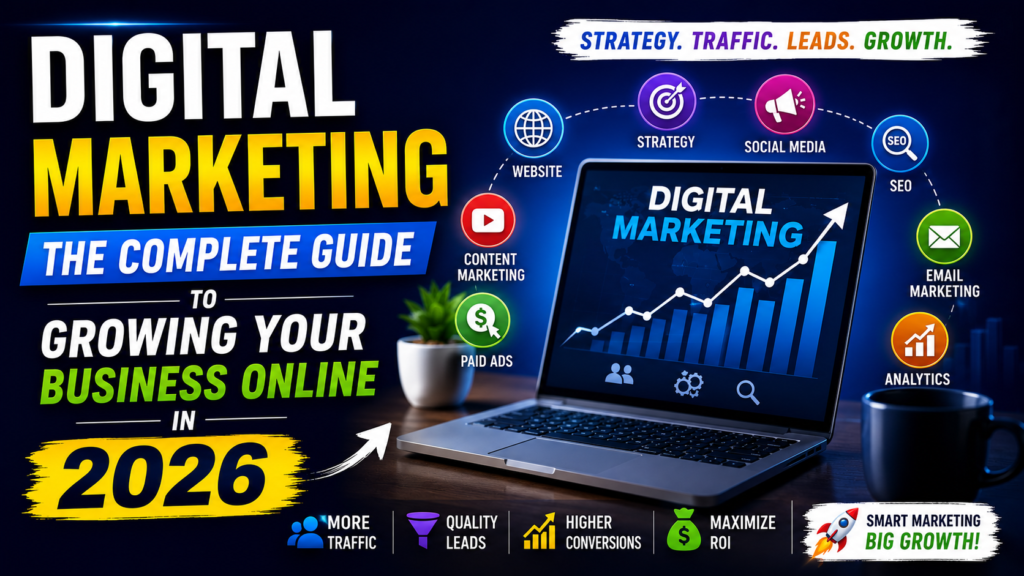
Digital Marketing: The Complete Guide to Growing Your Business Online in 2026

In today’s digital world, having a great product or service is no longer enough. Businesses must also establish a strong online presence to reach their target audience, generate leads, and increase sales. This is where Digital Marketing plays a vital role. Digital marketing is the process of promoting products, services, or brands using online channels such as search engines, social media, websites, email, and paid advertising. Unlike traditional marketing, digital marketing allows businesses to connect with the right audience, measure campaign performance, and achieve better results with a cost-effective budget. Whether you’re a startup, small business owner, freelancer, or large enterprise, digital marketing is one of the most powerful tools for business growth in 2026. What is Digital Marketing? Digital marketing refers to all marketing activities that use the internet or digital devices to promote a business. It helps companies reach potential customers where they spend most of their time—online. The primary goal of digital marketing is to attract visitors, convert them into customers, and build long-term relationships through valuable content and personalized experiences. With billions of people using Google, Facebook, Instagram, YouTube, LinkedIn, and other online platforms every day, digital marketing has become essential for businesses of every size. Why Digital Marketing is Important Digital marketing offers several advantages over traditional advertising methods. It allows businesses to target specific audiences based on location, interests, age, behavior, and search intent. This ensures that marketing budgets are spent more efficiently. Another major benefit is measurable performance. Businesses can track website traffic, conversions, customer engagement, and return on investment (ROI) using analytics tools. Digital marketing also helps build brand awareness, improve customer trust, increase online visibility, and generate qualified leads consistently. Key Components of Digital Marketing 1. Search Engine Optimization (SEO) SEO is the process of improving a website so it ranks higher on search engines like Google. When your website appears on the first page of search results, it receives more organic traffic without paying for advertisements. SEO includes: A well-optimized website attracts visitors who are actively searching for your products or services. 2. Content Marketing Content is the foundation of digital marketing. Businesses create valuable content to educate, inform, and engage their audience instead of directly selling to them. Examples include: High-quality content improves SEO, builds authority, and increases customer trust. 3. Social Media Marketing Social media platforms have become essential marketing channels. Businesses use Facebook, Instagram, LinkedIn, YouTube, Pinterest, Threads, and X (formerly Twitter) to connect with customers and promote their brands. Popular social media strategies include: Consistent posting and audience engagement help businesses build loyal communities. 4. Pay-Per-Click (PPC) Advertising PPC advertising allows businesses to display ads on Google, YouTube, Facebook, Instagram, and other platforms. Advertisers only pay when someone clicks on their advertisement. Popular PPC platforms include: PPC campaigns provide immediate visibility and generate high-quality leads when properly optimized. 5. Email Marketing Email marketing remains one of the highest-return digital marketing strategies. Businesses use email campaigns to: Personalized emails often generate higher engagement and conversions than generic promotional messages. 6. Affiliate Marketing Affiliate marketing allows businesses to partner with influencers, bloggers, and publishers who promote products in exchange for a commission. This strategy helps brands reach new audiences while paying only for successful sales or leads. 7. Influencer Marketing Influencers have become trusted voices in many industries. Businesses collaborate with influencers to promote products through authentic reviews, demonstrations, and recommendations. In 2026, micro-influencers with smaller but highly engaged audiences often deliver better results than celebrity influencers. Latest Digital Marketing Trends in 2026 The digital marketing industry continues to evolve rapidly. Some of the biggest trends include: Businesses that adopt these trends stay ahead of competitors and improve customer engagement. Benefits of Digital Marketing Digital marketing offers numerous advantages, including: These benefits make digital marketing an essential investment for businesses of all sizes. Common Digital Marketing Mistakes Many businesses fail to achieve results because they make avoidable mistakes. Some common mistakes include: Avoiding these mistakes can significantly improve marketing performance. How to Build an Effective Digital Marketing Strategy A successful digital marketing strategy starts with clear business goals. Begin by understanding your target audience and identifying the platforms they use most. Next, create valuable content that solves customer problems and answers common questions. Optimize your website for search engines, invest in social media marketing, run targeted advertising campaigns, and track your performance using analytics tools. Regularly analyze your results and make improvements based on customer behavior and campaign data. Consistency, creativity, and continuous optimization are the keys to long-term success. The Future of Digital Marketing Digital marketing will continue to become more data-driven and customer-focused. Artificial Intelligence, automation, predictive analytics, voice search, and personalized experiences will shape the future of online marketing. Businesses that embrace new technologies while maintaining authentic customer relationships will have a significant competitive advantage. The future belongs to brands that provide value, build trust, and create meaningful connections with their audience. Conclusion Digital marketing is no longer optional—it is a necessity for businesses that want to grow in today’s competitive online environment. From SEO and content marketing to social media, paid advertising, email marketing, and AI-powered automation, every digital marketing channel plays an important role in attracting customers and increasing revenue. Success in digital marketing doesn’t happen overnight. It requires a clear strategy, consistent effort, quality content, and continuous learning. By understanding the latest trends and implementing the right marketing techniques, businesses can strengthen their online presence, generate more leads, increase customer loyalty, and achieve sustainable growth in 2026 and beyond.
Blog

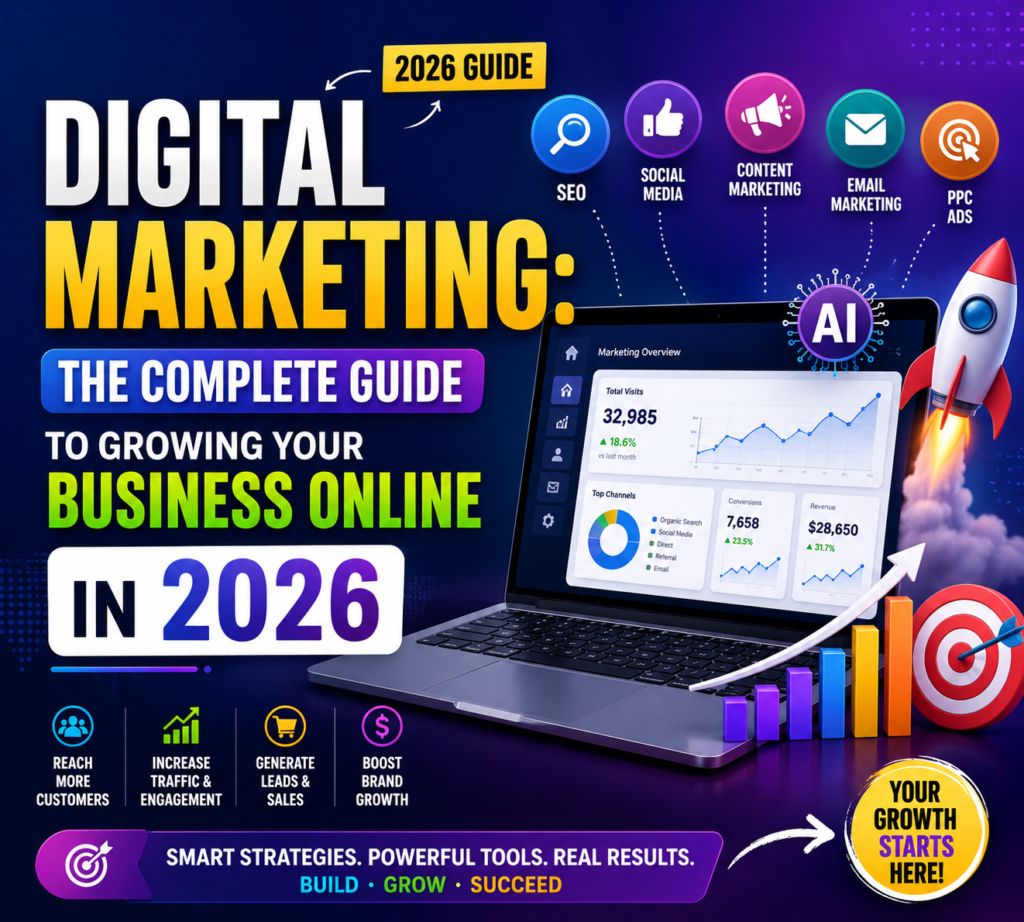
Digital Marketing: The Complete Guide to Growing Your Business Online in 2026

In today’s digital world, having a great product or service is no longer enough. Businesses must also establish a strong online presence to reach their target audience, generate leads, and increase sales. This is where Digital Marketing plays a vital role. Digital marketing is the process of promoting products, services, or brands using online channels such as search engines, social media, websites, email, and paid advertising. Unlike traditional marketing, digital marketing allows businesses to connect with the right audience, measure campaign performance, and achieve better results with a cost-effective budget. Whether you’re a startup, small business owner, freelancer, or large enterprise, digital marketing is one of the most powerful tools for business growth in 2026. What is Digital Marketing? Digital marketing refers to all marketing activities that use the internet or digital devices to promote a business. It helps companies reach potential customers where they spend most of their time—online. The primary goal of digital marketing is to attract visitors, convert them into customers, and build long-term relationships through valuable content and personalized experiences. With billions of people using Google, Facebook, Instagram, YouTube, LinkedIn, and other online platforms every day, digital marketing has become essential for businesses of every size. Why Digital Marketing is Important Digital marketing offers several advantages over traditional advertising methods. It allows businesses to target specific audiences based on location, interests, age, behavior, and search intent. This ensures that marketing budgets are spent more efficiently. Another major benefit is measurable performance. Businesses can track website traffic, conversions, customer engagement, and return on investment (ROI) using analytics tools. Digital marketing also helps build brand awareness, improve customer trust, increase online visibility, and generate qualified leads consistently. Key Components of Digital Marketing 1. Search Engine Optimization (SEO) SEO is the process of improving a website so it ranks higher on search engines like Google. When your website appears on the first page of search results, it receives more organic traffic without paying for advertisements. SEO includes: A well-optimized website attracts visitors who are actively searching for your products or services. 2. Content Marketing Content is the foundation of digital marketing. Businesses create valuable content to educate, inform, and engage their audience instead of directly selling to them. Examples include: High-quality content improves SEO, builds authority, and increases customer trust. 3. Social Media Marketing Social media platforms have become essential marketing channels. Businesses use Facebook, Instagram, LinkedIn, YouTube, Pinterest, Threads, and X (formerly Twitter) to connect with customers and promote their brands. Popular social media strategies include: Consistent posting and audience engagement help businesses build loyal communities. 4. Pay-Per-Click (PPC) Advertising PPC advertising allows businesses to display ads on Google, YouTube, Facebook, Instagram, and other platforms. Advertisers only pay when someone clicks on their advertisement. Popular PPC platforms include: PPC campaigns provide immediate visibility and generate high-quality leads when properly optimized. 5. Email Marketing Email marketing remains one of the highest-return digital marketing strategies. Businesses use email campaigns to: Personalized emails often generate higher engagement and conversions than generic promotional messages. 6. Affiliate Marketing Affiliate marketing allows businesses to partner with influencers, bloggers, and publishers who promote products in exchange for a commission. This strategy helps brands reach new audiences while paying only for successful sales or leads. 7. Influencer Marketing Influencers have become trusted voices in many industries. Businesses collaborate with influencers to promote products through authentic reviews, demonstrations, and recommendations. In 2026, micro-influencers with smaller but highly engaged audiences often deliver better results than celebrity influencers. Latest Digital Marketing Trends in 2026 The digital marketing industry continues to evolve rapidly. Some of the biggest trends include: Businesses that adopt these trends stay ahead of competitors and improve customer engagement. Benefits of Digital Marketing Digital marketing offers numerous advantages, including: These benefits make digital marketing an essential investment for businesses of all sizes. Common Digital Marketing Mistakes Many businesses fail to achieve results because they make avoidable mistakes. Some common mistakes include: Avoiding these mistakes can significantly improve marketing performance. How to Build an Effective Digital Marketing Strategy A successful digital marketing strategy starts with clear business goals. Begin by understanding your target audience and identifying the platforms they use most. Next, create valuable content that solves customer problems and answers common questions. Optimize your website for search engines, invest in social media marketing, run targeted advertising campaigns, and track your performance using analytics tools. Regularly analyze your results and make improvements based on customer behavior and campaign data. Consistency, creativity, and continuous optimization are the keys to long-term success. The Future of Digital Marketing Digital marketing will continue to become more data-driven and customer-focused. Artificial Intelligence, automation, predictive analytics, voice search, and personalized experiences will shape the future of online marketing. Businesses that embrace new technologies while maintaining authentic customer relationships will have a significant competitive advantage. The future belongs to brands that provide value, build trust, and create meaningful connections with their audience. Conclusion Digital marketing is no longer optional—it is a necessity for businesses that want to grow in today’s competitive online environment. From SEO and content marketing to social media, paid advertising, email marketing, and AI-powered automation, every digital marketing channel plays an important role in attracting customers and increasing revenue. Success in digital marketing doesn’t happen overnight. It requires a clear strategy, consistent effort, quality content, and continuous learning. By understanding the latest trends and implementing the right marketing techniques, businesses can strengthen their online presence, generate more leads, increase customer loyalty, and achieve sustainable growth in 2026 and beyond.

Blog

Digital Marketing: The Complete Guide to Growing Your Business Online in 2026

In today’s digital world, having a great product or service is no longer enough. Businesses must also establish a strong online presence to reach their target audience, generate leads, and increase sales. This is where Digital Marketing plays a vital role. Digital marketing is the process of promoting products, services, or brands using online channels such as search engines, social media, websites, email, and paid advertising. Unlike traditional marketing, digital marketing allows businesses to connect with the right audience, measure campaign performance, and achieve better results with a cost-effective budget. Whether you’re a startup, small business owner, freelancer, or large enterprise, digital marketing is one of the most powerful tools for business growth in 2026. What is Digital Marketing? Digital marketing refers to all marketing activities that use the internet or digital devices to promote a business. It helps companies reach potential customers where they spend most of their time—online. The primary goal of digital marketing is to attract visitors, convert them into customers, and build long-term relationships through valuable content and personalized experiences. With billions of people using Google, Facebook, Instagram, YouTube, LinkedIn, and other online platforms every day, digital marketing has become essential for businesses of every size. Why Digital Marketing is Important Digital marketing offers several advantages over traditional advertising methods. It allows businesses to target specific audiences based on location, interests, age, behavior, and search intent. This ensures that marketing budgets are spent more efficiently. Another major benefit is measurable performance. Businesses can track website traffic, conversions, customer engagement, and return on investment (ROI) using analytics tools. Digital marketing also helps build brand awareness, improve customer trust, increase online visibility, and generate qualified leads consistently. Key Components of Digital Marketing 1. Search Engine Optimization (SEO) SEO is the process of improving a website so it ranks higher on search engines like Google. When your website appears on the first page of search results, it receives more organic traffic without paying for advertisements. SEO includes: A well-optimized website attracts visitors who are actively searching for your products or services. 2. Content Marketing Content is the foundation of digital marketing. Businesses create valuable content to educate, inform, and engage their audience instead of directly selling to them. Examples include: High-quality content improves SEO, builds authority, and increases customer trust. 3. Social Media Marketing Social media platforms have become essential marketing channels. Businesses use Facebook, Instagram, LinkedIn, YouTube, Pinterest, Threads, and X (formerly Twitter) to connect with customers and promote their brands. Popular social media strategies include: Consistent posting and audience engagement help businesses build loyal communities. 4. Pay-Per-Click (PPC) Advertising PPC advertising allows businesses to display ads on Google, YouTube, Facebook, Instagram, and other platforms. Advertisers only pay when someone clicks on their advertisement. Popular PPC platforms include: PPC campaigns provide immediate visibility and generate high-quality leads when properly optimized. 5. Email Marketing Email marketing remains one of the highest-return digital marketing strategies. Businesses use email campaigns to: Personalized emails often generate higher engagement and conversions than generic promotional messages. 6. Affiliate Marketing Affiliate marketing allows businesses to partner with influencers, bloggers, and publishers who promote products in exchange for a commission. This strategy helps brands reach new audiences while paying only for successful sales or leads. 7. Influencer Marketing Influencers have become trusted voices in many industries. Businesses collaborate with influencers to promote products through authentic reviews, demonstrations, and recommendations. In 2026, micro-influencers with smaller but highly engaged audiences often deliver better results than celebrity influencers. Latest Digital Marketing Trends in 2026 The digital marketing industry continues to evolve rapidly. Some of the biggest trends include: Businesses that adopt these trends stay ahead of competitors and improve customer engagement. Benefits of Digital Marketing Digital marketing offers numerous advantages, including: These benefits make digital marketing an essential investment for businesses of all sizes. Common Digital Marketing Mistakes Many businesses fail to achieve results because they make avoidable mistakes. Some common mistakes include: Avoiding these mistakes can significantly improve marketing performance. How to Build an Effective Digital Marketing Strategy A successful digital marketing strategy starts with clear business goals. Begin by understanding your target audience and identifying the platforms they use most. Next, create valuable content that solves customer problems and answers common questions. Optimize your website for search engines, invest in social media marketing, run targeted advertising campaigns, and track your performance using analytics tools. Regularly analyze your results and make improvements based on customer behavior and campaign data. Consistency, creativity, and continuous optimization are the keys to long-term success. The Future of Digital Marketing Digital marketing will continue to become more data-driven and customer-focused. Artificial Intelligence, automation, predictive analytics, voice search, and personalized experiences will shape the future of online marketing. Businesses that embrace new technologies while maintaining authentic customer relationships will have a significant competitive advantage. The future belongs to brands that provide value, build trust, and create meaningful connections with their audience. Conclusion Digital marketing is no longer optional—it is a necessity for businesses that want to grow in today’s competitive online environment. From SEO and content marketing to social media, paid advertising, email marketing, and AI-powered automation, every digital marketing channel plays an important role in attracting customers and increasing revenue. Success in digital marketing doesn’t happen overnight. It requires a clear strategy, consistent effort, quality content, and continuous learning. By understanding the latest trends and implementing the right marketing techniques, businesses can strengthen their online presence, generate more leads, increase customer loyalty, and achieve sustainable growth in 2026 and beyond.

Scroll to Top